Aug 14, 2026
Financial Freedom Is the Freedom to Own Your Time
READ MORE


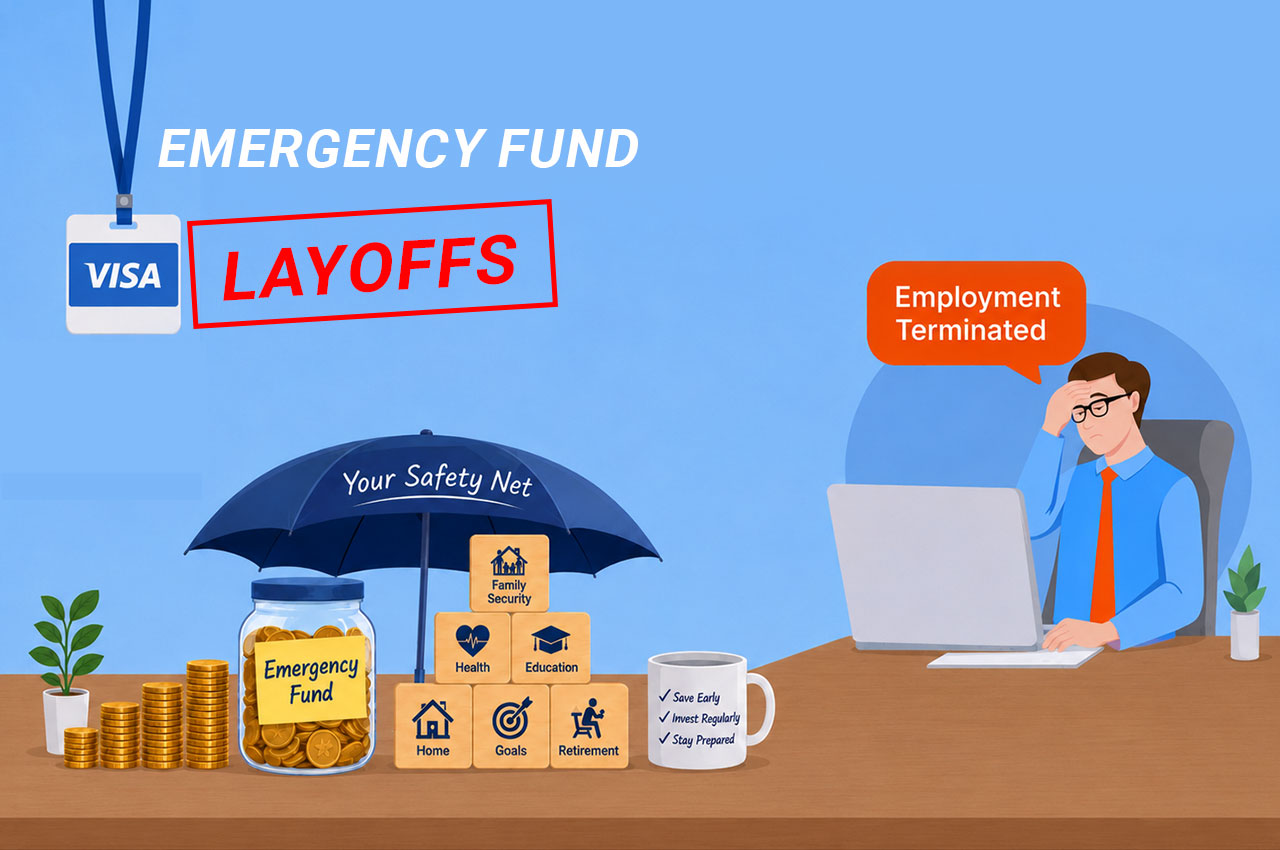
In the early morning hours of July 29, 2026, some employees of Visa in India reportedly received emails between 4 am and 5 am informing them that their jobs had been terminated. Some had worked with the company for many years. Managers, engineers and senior professionals were among those affected.
Visa is not a struggling business. It is a highly successful global company. Yet it decided to reduce around 7% of its workforce as part of a worldwide restructuring, with technology and product teams bearing much of the impact.
There is an important financial lesson here.
The best time to prepare is when everything appears comfortable
When salaries arrive regularly, increments are expected, and careers are progressing well, financial emergencies seem distant. That is precisely when we should prepare for them.
People often postpone saving because they believe they can start after the next promotion, after buying a car or after completing a major family expense. But expenses have a habit of rising with income. Unless saving becomes a discipline, the right time may never arrive.
Saving should not be what remains after spending. It should be the first allocation made from every month’s income.
An emergency fund is money kept aside for events that cannot be predicted, such as loss of employment, illness, a family emergency or an urgent repair.
For most salaried families, it should cover at least six months of essential household expenses. Those with a single earning member, large loan commitments, dependent parents or uncertain employment may require nine to twelve months.
Essential expenses include:
This money should be easily accessible. A suitable combination of a savings account, sweep deposit and liquid mutual fund may be considered. The purpose of an emergency fund is not to earn the highest return. Its purpose is to be available when you need it.
Saving protects the present. Investing protects the future.
An emergency fund alone is not enough. Once the safety reserve is in place, regular investments are necessary to build long-term financial independence.
A Systematic Investment Plan allows you to invest every month before the money is absorbed by discretionary spending. Over time, discipline and compounding can turn modest monthly investments into meaningful wealth.
The ideal sequence is simple:
Higher income often leads immediately to a larger car, a more expensive holiday or a bigger monthly commitment. Enjoying the rewards of one’s work is important, but every increment should also strengthen the family’s finances.
A simple rule is to invest a fixed portion of every salary increase or bonus before raising lifestyle expenses. This creates wealth without making the process feel burdensome.
The true purpose of investing is not merely to accumulate a large number on a statement. It is to create choices.
If employment is suddenly interrupted, savings provide time to think. They prevent a family from selling long-term investments in distress, taking expensive loans or accepting the first available job out of desperation.
An emergency fund buys breathing space. Long-term investments gradually buy financial freedom.
The lesson from sudden corporate layoffs is not that we should live in fear. It is that we should use the good years wisely.
When the going is good, save. When income is rising, invest more. Build the umbrella before it starts raining.
This article is intended for investor education and does not constitute personalised investment advice. Investment decisions should be made after considering individual circumstances, goals and risk profile.