Sep 26, 2026
What Are People Really Paying For?
READ MORE


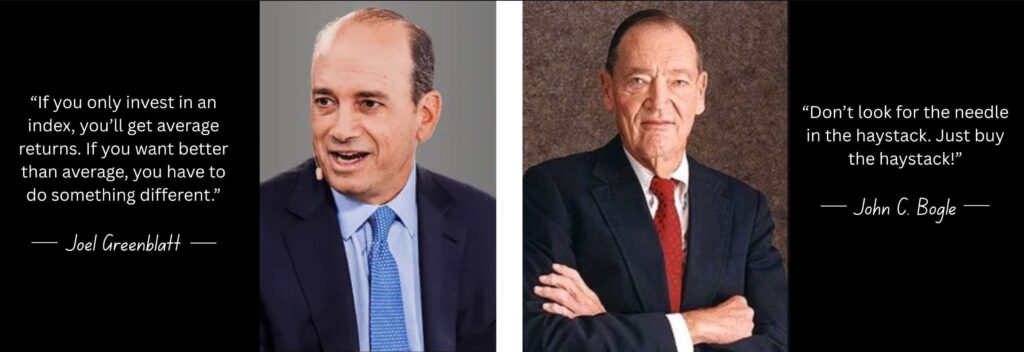
Two legendary investors. Two seemingly opposite views. One urges us to break away from the index in search of superior returns, while the other tells us to embrace it.
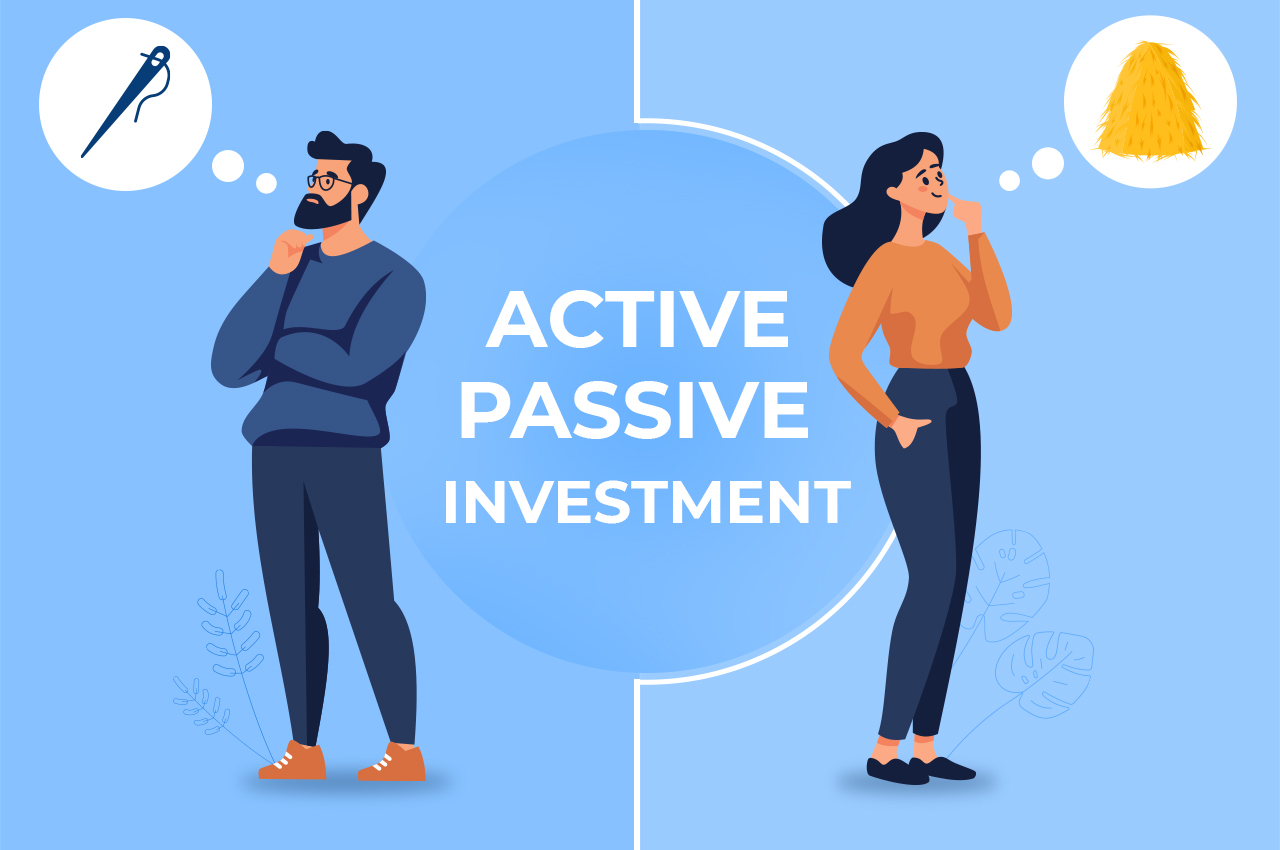
At first glance, this feels contradictory. But in reality, both perspectives hold important lessons. Together, they frame one of the biggest debates in modern investing: active versus passive.
Investors today face an abundance of choices. Every product, every strategy, every philosophy promises to be the right one. This abundance, however, breeds confusion.
Should you trust a professional manager to pick the best securities actively? Or should you settle for the simplicity and cost-efficiency of an index fund?
The truth lies somewhere in between. Let’s unpack both approaches.
Active investing is when a portfolio manager makes deliberate choices about what to buy, hold, or sell based on research, analysis, and judgment. The portfolio is intentionally different from the benchmark index to outperform it.
At its core, active investing is about judgment, foresight, and seizing opportunities that aren’t obvious to the broader market.
Passive investing is the opposite approach. Instead of trying to beat the market, it mirrors it. A passive fund replicates a benchmark index (such as the Nifty 50 or Nifty 500), ensuring investors receive market-level returns at very low cost.
Passive investing is, above all, about consistency, efficiency, and long-term participation in market growth.
Rather than treating active and passive as competitors, investors can use both to their advantage. For most investors, the real key is:
So who was right, Greenblatt or Bogle? The answer: both.
Bogle’s vision of low-cost, transparent, broad-based investing gave ordinary investors a level playing field. Greenblatt’s conviction in doing something different highlights the value of skill, insight, and courage in markets.
The future of investing is not about choosing one camp, but combining both philosophies in proportions that suit an investor’s goals, risk appetite, and time horizon.
Passive funds can form a reliable backbone of a portfolio for long-term wealth creation. Around that core, active strategies can add alpha, manage risks dynamically, and capture unique opportunities.
In the end, investing isn’t about extremes. It’s about balance using both the haystack and the needle when they matter most.